If you’re looking for a powerful, energy-efficient, and cost-effective heating solution, Fire Industrial Equipment’s Hot Air Generator is an excellent investment. With multi-fuel support, high performance, and long-lasting durability, it is perfectly suited for industries like Namkeen, Masala, Tea Gardens, Textile, Printing, Packaging, and Room Heating.
This Hot Air Generator is truly a dependable solution for any business seeking consistent heating with minimum operational cost.
Introduction to Fabric Drying in Textile Industries
Key Benefits of Fabric Drying Hot Air Generators
Applications of Hot Air Generators in Textile Industries
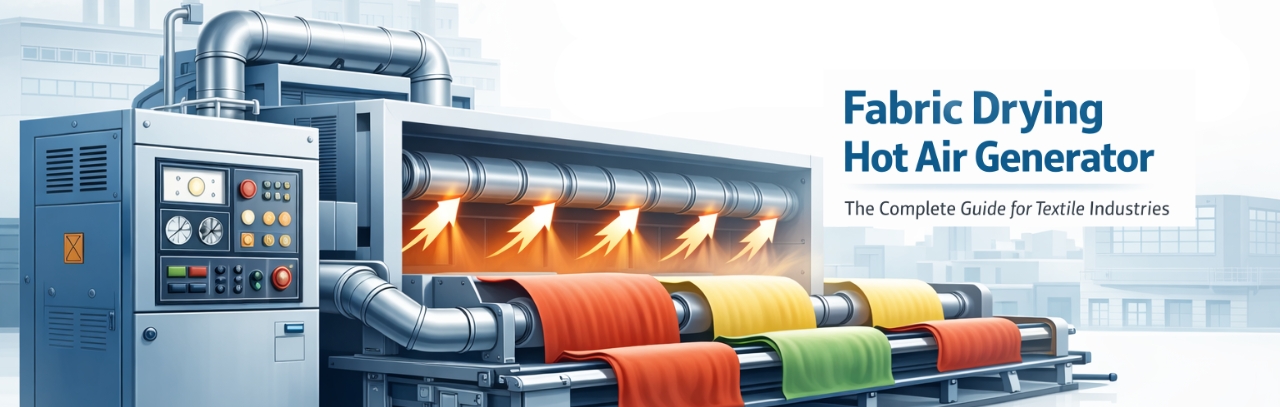
In the textile industry, efficient fabric drying plays a crucial role in maintaining product quality, production speed, and energy efficiency. Traditional drying methods often lead to uneven moisture removal, fabric damage, and high operational costs. This is where a Fabric Drying Hot Air Generator becomes an essential solution for modern textile industries.
This complete guide explains what a fabric drying hot air generator is, how it works, its benefits, applications, and how to choose the right system for your textile unit. (Pelletburnerindia)
A Fabric Drying Hot Air Generator is an industrial heating system designed to produce clean, controlled hot air used for drying fabrics after washing, dyeing, printing, or finishing processes. It ensures uniform heat distribution, faster moisture evaporation, and consistent fabric quality.
These systems are widely used in textile processing units, garment factories, and dye houses where precision drying is required.
A fabric drying hot air generator works by heating air using a fuel source such as biomass, LPG, diesel, or electricity. The heated air is then circulated through ducts or chambers where the fabric is placed.
Working Process:
This controlled process prevents fabric shrinkage, discoloration, and overheating.
1. Uniform Fabric Drying
Hot air generators provide consistent temperature across the fabric surface, reducing uneven drying and quality defects
Fabric drying hot air generators are widely used in:
They are suitable for drying cotton, polyester, wool, silk, and blended fabrics.
Drying Speed:
Hot Air Generator – Fast drying
Conventional Drying – Slow process
Heat Control:
Hot Air Generator – Precise temperature control
Conventional Drying – Limited heat control
Energy Efficiency:
Hot Air Generator – High energy efficiency
Conventional Drying – Low efficiency
Fabric Quality:
Hot Air Generator – Fabric quality maintained
Conventional Drying – Risk of fabric damage
Operating Cost:
Hot Air Generator – Optimized and cost-effective
Conventional Drying – Higher operating cost
When selecting the right system, consider:
Choosing the right generator ensures long-term performance and cost savings.
Proper maintenance improves system life and ensures consistent drying quality.
Textile manufacturers prefer fabric drying hot air generators because they:
With increasing demand for efficiency and sustainability, hot air generators have become a standard drying solution in textile industries.
A Fabric Drying Hot Air Generator is a reliable, efficient, and cost-effective solution for textile industries looking to improve drying performance and product quality. By offering controlled heat, faster drying cycles, and energy savings, it plays a vital role in modern textile manufacturing.





Find Clear and Helpful Answers to the Most Common Questions
Haryana
Yamuna Nagar-135001.
Karnataka
Bengaluru (Bangalore)-561203
Gujarat
Survey No 477, Tapar Ajapar Road Ajapar Kutch
Uttar Pradesh
Laharpur, Nabi Nagar Sitapur-261135
West Bengal
Bara Haripur Bangshihari Dakshin Dinapur-733121
Assam
Village – Dhansirikash,
P.O. – Shyamtila, P.S.-Dhula, Darrang,
Assam-78414
Plot number 22 khasra number 143 ground floor gali number 2 Kanjhawala industrial area delhi 110081
fireindustrialequipment@gmail.com
+91-9871484662
WhatsApp us