What Are Pellet Burners?
What Are Traditional Fuel Burners?
Pellet Burners vs Traditional Fuel Burners: Key Comparison
Pros & Cons of Pellet Burners
Pros & Cons of Traditional Fuel Burners
Which Burner Is Better for Industrial Use?
As industries across India look for cost-effective and sustainable heating solutions, the debate between pellet burners and traditional fuel burners (coal, diesel, furnace oil, LPG) has become more relevant than ever. Each system comes with its own advantages and limitations, depending on fuel cost, efficiency, environmental impact, and operational needs.
In this blog, we’ll break down the pros and cons of pellet burners vs traditional fuel burners to help you make an informed decision for your industrial heating requirements.
Pellet burners use biomass pellets made from agricultural waste, sawdust, or wood residue as fuel. These burners are designed to provide consistent heat output while reducing carbon emissions and fuel costs.
They are widely used in:
Boilers
Hot air generators
Furnaces
Food processing units
Textile and chemical industries
Traditional fuel burners rely on coal, diesel, furnace oil, LPG, or natural gas to generate heat. These burners have been in use for decades and are known for high heat output and quick ignition.
Common applications include:
Heavy manufacturing
Power plants
Large-scale industrial boilers
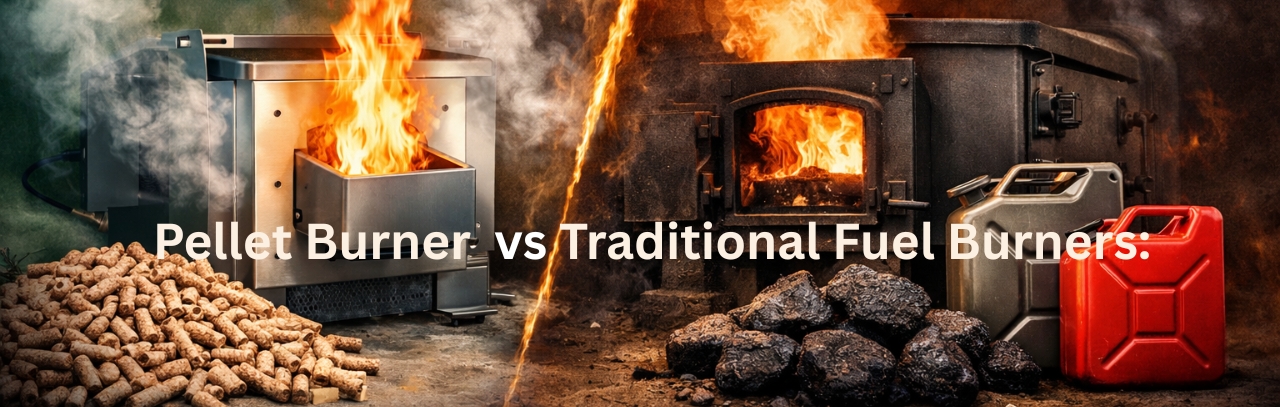
Pellet burners operate using biomass pellets, which are a renewable energy source, whereas traditional fuel burners rely on coal, diesel, LPG, or furnace oil, all of which are fossil fuels. One of the biggest advantages of pellet burners is their low and stable fuel cost, while traditional fuels are known for price fluctuations and rising expenses.
From an environmental perspective, pellet burners are eco-friendly and produce significantly lower emissions, making them suitable for industries aiming to reduce their carbon footprint. In contrast, traditional fuel burners generate higher pollution levels and carbon emissions, often leading to compliance challenges.
In terms of performance, pellet burners offer high efficiency through controlled combustion, ensuring consistent heat output with minimal fuel wastage. Traditional fuel burners can also deliver high heat but are generally fuel-intensive, increasing operational costs. Maintenance requirements differ as well—pellet burners produce less ash and residue, resulting in lower maintenance, while traditional burners require frequent cleaning and higher upkeep.
Additionally, pellet burner systems are typically semi to fully automated, reducing manual intervention and improving operational efficiency. Traditional fuel burners, on the other hand, are mostly manual or semi-automatic. When it comes to regulations, pellet burners face easier government compliance due to green energy norms, whereas traditional fuel burners are subject to strict pollution and environmental regulations.
Pros
Cons
Pros
Cons
If your priority is cost savings, sustainability, and compliance with environmental norms, pellet burners are the better choice—especially for small to medium-scale industries.
However, traditional fuel burners may still be preferred for heavy industries requiring extremely high and continuous heat output.
With increasing fuel prices and stricter emission regulations, pellet burners are emerging as a future-ready alternative to traditional fuel burners. They offer a balanced mix of efficiency, affordability, and sustainability, making them an ideal solution for modern industries aiming to reduce operational costs and environmental impact.





Find Clear and Helpful Answers to the Most Common Questions
Haryana
Yamuna Nagar-135001.
Karnataka
Bengaluru (Bangalore)-561203
Gujarat
Survey No 477, Tapar Ajapar Road Ajapar Kutch
Uttar Pradesh
Laharpur, Nabi Nagar Sitapur-261135
West Bengal
Bara Haripur Bangshihari Dakshin Dinapur-733121
Assam
Village – Dhansirikash,
P.O. – Shyamtila, P.S.-Dhula, Darrang,
Assam-78414
Plot number 22 khasra number 143 ground floor gali number 2 Kanjhawala industrial area delhi 110081
fireindustrialequipment@gmail.com
+91-9871484662
WhatsApp us