

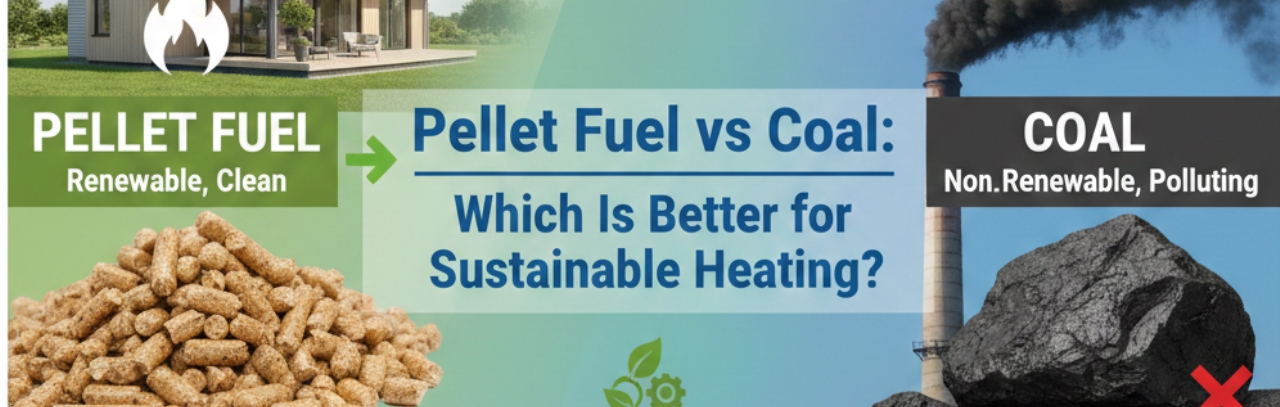
Heating keeps industries running, Homes warm, Processes moving. But the fuel behind that heat matters now. A lot,
Coal has powered industries for decades, Cheap, Powerful, Familiar. But it comes with smoke, emissions, and long-term damage. Pellet fuel enters the picture quietly. Cleaner, Renewable. more balanced so the question is simple. Which one actually makes sense for sustainable heating?
Pellet fuel is made from waste. Useful waste.
Sawdust. Agricultural residue. Wood chips. Organic leftovers are compressed into small, dense pellets.
They burn evenly. Predictably. And much cleaner. Pellet burners are designed to control combustion automatically. Less wastage. Less effort. Better efficiency.
Coal is old energy, very old.
Formed over millions of years, it delivers high heat and has been widely used everywhere. Industries trust it. Know it well.But coal burns dirty. High CO₂. Ash. Sulfur. Particulates. And once it’s used, it’s gone forever.
Carbon Emissions & Environmental Impact
Pellet fuel is considered carbon-neutral. The CO₂ released during burning is mostly balanced by the carbon plants absorb while growing. Coal has no such balance. It releases stored carbon straight into the atmosphere. Cleaner air vs heavier pollution. Pellet fuel clearly wins here.
Efficiency & Heat Output
Coal gives strong heat. No doubt.
But it needs monitoring. Manual handling. And creates a lot of ash. Pellet fuel burns consistently. Modern burners regulate airflow and fuel feed automatically. Less mess. More control. Better efficiency overall.
Cost Considerations
Coal looks cheaper at first. On paper. Pellet fuel systems may cost more upfront. But operational costs stay lower over time. Less handling. Fewer compliance issues. Better efficiency.
Short-term saving vs long-term sense. Pellet fuel usually wins in the long run.
Availability & Supply
Coal is widely available. But it’s finite. And mining damages ecosystems. Pellet fuel depends on biomass availability. In agricultural regions, supply is steady and renewable. Coal may feel easier today. Pellet fuel is safer for tomorrow.
Waste Management & Sustainability
Pellet fuel uses waste material that would otherwise go to landfills or be burned openly. Coal mining and burning generate massive waste and long-lasting environmental damage. Circular economy vs permanent damage.
The difference is clear.
It checks more boxes. Simple.
Pellet fuel isn’t perfect.
But with certified pellets and modern burner systems, these challenges stay manageable.
If sustainability matters, pellet fuel is the better choice.
Cleaner, Renewable, Future-ready, coal may still appeal where immediate cost is the only concern. But its environmental footprint is heavy. And long-lasting.
The trade-off is obvious.
Moving from coal to pellet fuel isn’t just an environmental decision. It’s a practical one. Lower emissions. Better efficiency. Long-term savings. And a step toward cleaner energy use. For industries and households thinking ahead, pellet fuel offers a more responsible way to stay warm—without burning the future.




Find Clear and Helpful Answers to the Most Common Questions
Haryana
Yamuna Nagar-135001.
Karnataka
Bengaluru (Bangalore)-561203
Gujarat
Survey No 477, Tapar Ajapar Road Ajapar Kutch
Uttar Pradesh
Laharpur, Nabi Nagar Sitapur-261135
West Bengal
Bara Haripur Bangshihari Dakshin Dinapur-733121
Assam
Village – Dhansirikash,
P.O. – Shyamtila, P.S.-Dhula, Darrang,
Assam-78414
Plot number 22 khasra number 143 ground floor gali number 2 Kanjhawala industrial area delhi 110081
fireindustrialequipment@gmail.com
+91-9871484662
WhatsApp us